
Way back in December 2018, we took a look at perfectionism and how that might be crippling your writing and keeping you from reaching your goals. But that’s only one of many possible roadblocks that could be standing in the way of you finishing (or even starting!) your novel. Whatever your personal hangups are, trust me, you are not alone. There are probably thousands of other authors out there struggling with the exact same issues. I myself have been there more times than I care to recall. But no matter what the hurdle was – chaotic life circumstances, lack of time, a dry spell where the ideas just wouldn’t come – I always made it through to the other side, and you can, too!
In the spirit of making this the BEST WRITING YEAR EVER, I’ve compiled a short list of tried-and-true tips to help you find (or rediscover) your writing groove in 2020:

1.) Give Yourself a Gold Star (You earned it!)
I know this sounds silly and a bit juvenile, but in the past six months I’ve taken to putting a sticker on the calendar each time I get some writing done on a given day. Not only does this act give me a tangible reward each time I write, but it also helps me identify trends in my writing schedule that I would never have noticed otherwise. When I see that I’ve only written three days or less in the last week, I know I’m shoving writing to the side too often, and need to prioritize it more. On the flip side of that coin, nothing beats the feeling of looking back on a week with five or six stickers and knowing that I’m really getting the work done. (I haven’t managed a seven-sticker week yet, but it’s always something to strive for!)

2.) Find a Writing Buddy (or Several!)
Just like with exercise routines or attempts to quit smoking, you greatly increase your chances of sticking to a writing schedule if you don’t have to write alone. Your writing partner could be someone you exchange chapters with online as a means of keeping on track, or someone you meet up with in person at Tim Hortons for a weekly writing session. Some great places to find writing partners: online CP match-ups, writing-related message boards, workshops, local writing groups. Don’t have a local writing group? Not a problem. Writers are solitary creatures by nature, but it’s easy enough to lure us out of our caves with the promise of food and being around others who share the same intense passion. Use your local library to put out a call for anyone interested in starting a writing group, and you may be surprised by how many people you connect with, and how invaluable those relationships become. To paraphrase the ghostly voice in Field of Dreams, “If you build it, they will come.”

3.) R-E-A-D
The follow-up to the classic advice “Write every day” is, of course, “Read every day.” I know this sounds counter-productive, and it may have some of you rolling your eyes and thinking, Read every day? Are you serious? I can barely scrape enough time together to write a few measly words a week, and now you want to add more reading to my to-do list? Ugh! My short answer to your rather long-winded complaint: Yes. You should read more. Reading not only sharpens your skills as an author and editor, but it can actually make you write more because it’s sending constant sparks of inspiration down those writerly neurons. I’m never more excited to get clattering on that keyboard than when I’m reading something awesome!

4.) Be a Problem-Solver
You’re not writing. You want to be writing. So, what’s stopping you? Being able to identify your own personal writing roadblocks and find solutions to getting over those humps is key. My CP, Anna, has trouble writing at her house because there are too many distractions like laundry, cleaning, etc. Her solution: she takes her laptop to a coffee shop. I sometimes have difficulty writing because my cat, Del, is jealous of my computer (if you have a cat or dog, you know exactly what I’m talking about). He sits underneath the table where I’m trying to work and cries (loudly) for attention. My solution: I take my laptop to the living room and sit on the couch, where he can happily curl up beside me while I write. If you check your email too much instead of writing, consider working on an older machine not capable of going online (yeah, these devices still exist – my laptop, which proudly features Windows Millennium Edition, can attest to this) or even try writing in a notebook instead of on a computer. My point is, if you can figure out what’s holding you back, you can overcome it.
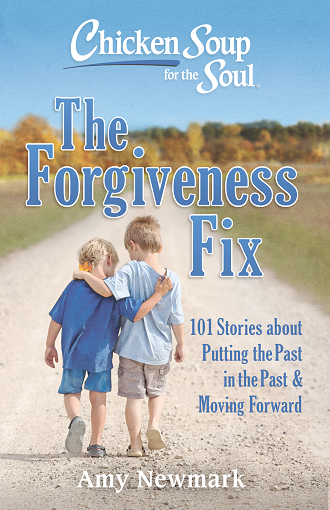
5.) Forgive Yourself
This may be the most important tip of the bunch, and quite possibly the hardest to pull off. We all have bad writing days, weeks, even years. We all have times in our lives when there’s too much personal drama going on, or our work schedule is crazy, or we just plain can’t find the motivation to get words on the page. This is just part of being a writer. Frankly, it’s just part of life. If you beat yourself up every time you don’t write (or every time you try to write but all the words that come out seem to suck), then you are forgetting something very important: that was yesterday. Today is a new day, a fresh start, a clean slate. Forgive and forget any perceived failures. Wash away lingering doubts and let them swirl down the drain at your feet. Today will be better. Today, you will write.
Happy 2020, everybody! Get writing! (I know you can do it!)
~Gretchen

 as the HERO flies...