Get Writing in 2020!

Why aren’t you writing? *sniffle*

Way back in December 2018, we took a look at perfectionism and how that might be crippling your writing and keeping you from reaching your goals. But that’s only one of many possible roadblocks that could be standing in the way of you finishing (or even starting!) your novel. Whatever your personal hangups are, trust me, you are not alone. There are probably thousands of other authors out there struggling with the exact same issues. I myself have been there more times than I care to recall. But no matter what the hurdle was – chaotic life circumstances, lack of time, a dry spell where the ideas just wouldn’t come – I always made it through to the other side, and you can, too!

In the spirit of making this the BEST WRITING YEAR EVER, I’ve compiled a short list of tried-and-true tips to help you find (or rediscover) your writing groove in 2020:


1.) Give Yourself a Gold Star (You earned it!)

I know this sounds silly and a bit juvenile, but in the past six months I’ve taken to putting a sticker on the calendar each time I get some writing done on a given day. Not only does this act give me a tangible reward each time I write, but it also helps me identify trends in my writing schedule that I would never have noticed otherwise. When I see that I’ve only written three days or less in the last week, I know I’m shoving writing to the side too often, and need to prioritize it more. On the flip side of that coin, nothing beats the feeling of looking back on a week with five or six stickers and knowing that I’m really getting the work done. (I haven’t managed a seven-sticker week yet, but it’s always something to strive for!)


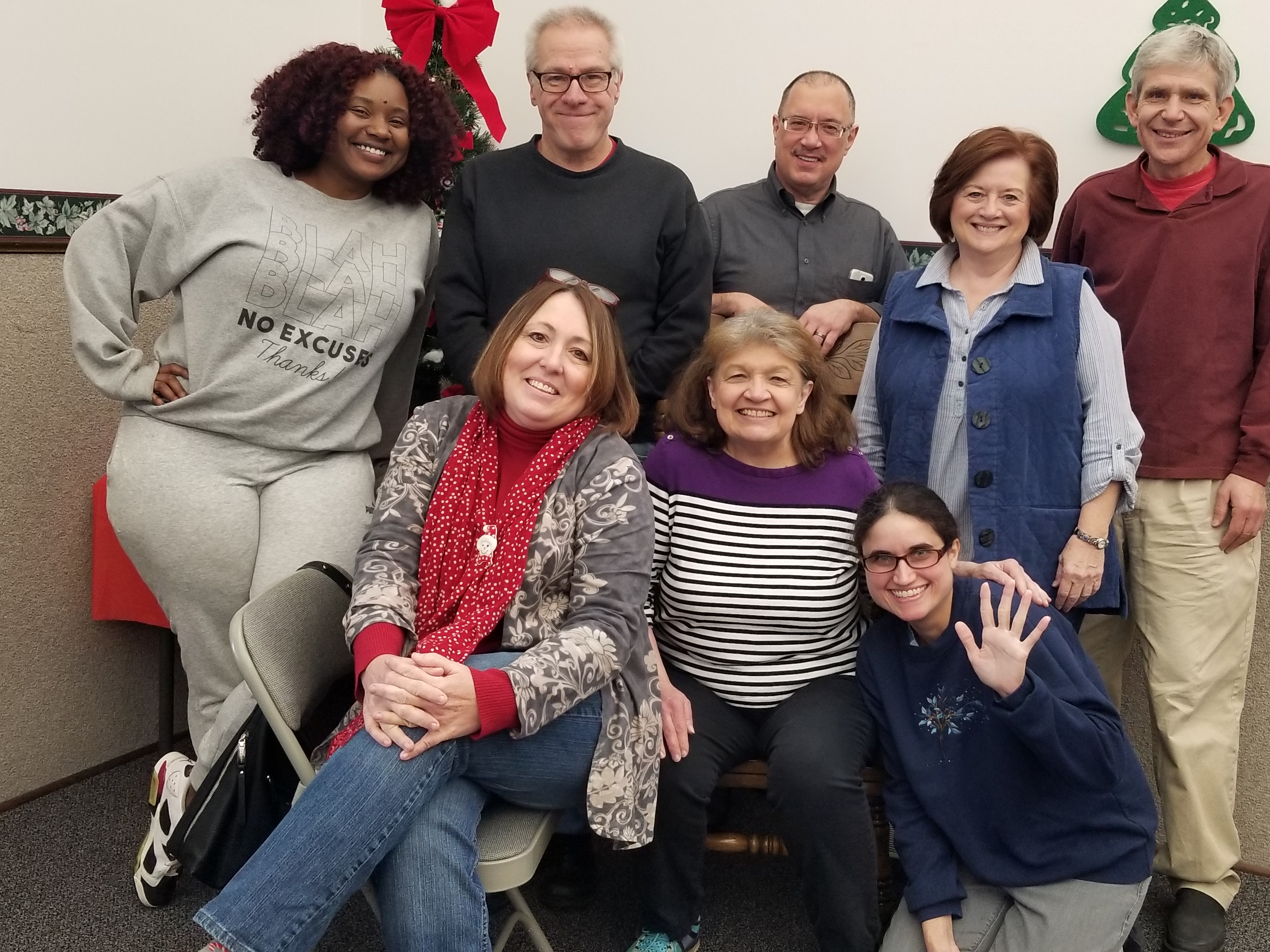
Super-cute picture of my writing group! Photo courtesy of SK Mabry.


2.) Find a Writing Buddy (or Several!)

Just like with exercise routines or attempts to quit smoking, you greatly increase your chances of sticking to a writing schedule if you don’t have to write alone. Your writing partner could be someone you exchange chapters with online as a means of keeping on track, or someone you meet up with in person at Tim Hortons for a weekly writing session. Some great places to find writing partners: online CP match-ups, writing-related message boards, workshops, local writing groups. Don’t have a local writing group? Not a problem. Writers are solitary creatures by nature, but it’s easy enough to lure us out of our caves with the promise of food and being around others who share the same intense passion. Use your local library to put out a call for anyone interested in starting a writing group, and you may be surprised by how many people you connect with, and how invaluable those relationships become. To paraphrase the ghostly voice in Field of Dreams, “If you build it, they will come.”


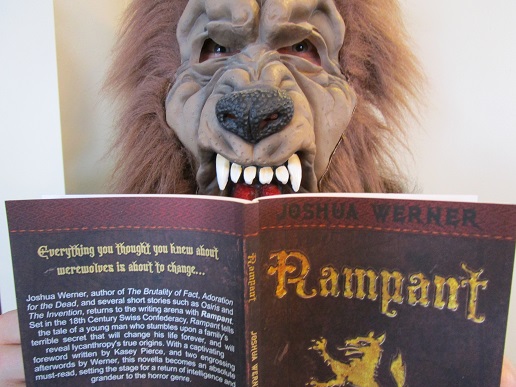
What big eyes you have…to read more books with!

3.) R-E-A-D

The follow-up to the classic advice “Write every day” is, of course, “Read every day.” I know this sounds counter-productive, and it may have some of you rolling your eyes and thinking, Read every day? Are you serious? I can barely scrape enough time together to write a few measly words a week, and now you want to add more reading to my to-do list? Ugh! My short answer to your rather long-winded complaint: Yes. You should read more. Reading not only sharpens your skills as an author and editor, but it can actually make you write more because it’s sending constant sparks of inspiration down those writerly neurons. I’m never more excited to get clattering on that keyboard than when I’m reading something awesome!


This little bugger tries to stop me from writing – but I don’t let him!


4.) Be a Problem-Solver

You’re not writing. You want to be writing. So, what’s stopping you? Being able to identify your own personal writing roadblocks and find solutions to getting over those humps is key. My CP, Anna, has trouble writing at her house because there are too many distractions like laundry, cleaning, etc. Her solution: she takes her laptop to a coffee shop. I sometimes have difficulty writing because my cat, Del, is jealous of my computer (if you have a cat or dog, you know exactly what I’m talking about). He sits underneath the table where I’m trying to work and cries (loudly) for attention. My solution: I take my laptop to the living room and sit on the couch, where he can happily curl up beside me while I write. If you check your email too much instead of writing, consider working on an older machine not capable of going online (yeah, these devices still exist – my laptop, which proudly features Windows Millennium Edition, can attest to this) or even try writing in a notebook instead of on a computer. My point is, if you can figure out what’s holding you back, you can overcome it.


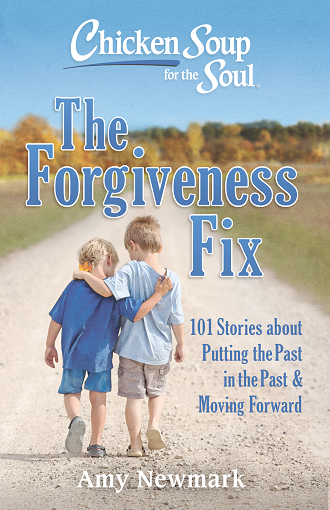
Self-forgiveness. So incredibly hard. So incredibly worth it.


5.) Forgive Yourself

This may be the most important tip of the bunch, and quite possibly the hardest to pull off. We all have bad writing days, weeks, even years. We all have times in our lives when there’s too much personal drama going on, or our work schedule is crazy, or we just plain can’t find the motivation to get words on the page. This is just part of being a writer. Frankly, it’s just part of life. If you beat yourself up every time you don’t write (or every time you try to write but all the words that come out seem to suck), then you are forgetting something very important: that was yesterday. Today is a new day, a fresh start, a clean slate. Forgive and forget any perceived failures. Wash away lingering doubts and let them swirl down the drain at your feet. Today will be better. Today, you will write.

Happy 2020, everybody! Get writing! (I know you can do it!)

~Gretchen


Ten Things You Should Never Say to a Writer

A friend and fellow writer found this painful-yet-all-too-true list on Pinterest. The proper title is “10 Things People Say to Creative Writers (but shouldn’t)” by Graphospasm. Having personally been a victim of Item #6 (“Have you been published yet?”) this list struck an ouchy chord with me, reminding me that a lot of people who aren’t writers don’t “get it.” In many cases, they don’t know what will hurt our feelings, what will make us bristle, and what is just plain RUDE.

I have no doubt the person who asked me whether I’d been published wasn’t trying to make me feel bad. Yet, he did. I was not published at that time, and I can still remember the feeling of my face turning red as I tried to stammer my defense: “Well, to get published, you really have to submit aggressively. Like, a lot of stories, to a lot of different publishers, and so far I haven’t really done that…” He was not impressed. Cue horrible feelings of failure.

Looking back, I feel bad that I felt bad. There was no reason for me to. I should have recognized that this individual simply didn’t understand the truth about writing (or publishing, for that matter), and made an uneducated remark.

The truth is, it’s HARD to get published. 85-90% of it is LUCK – the right story hitting the right market at the exact right time. Not being published isn’t a sign of failure, and it’s certainly no indication that your work isn’t good. What’s more, some writers don’t even WANT to get published. It’s not even on the agenda for them. One of my best friends has been writing short stories since grade school, and, to my knowledge, he has never once submitted one for publication. His joy comes from the writing itself. From having created something. From sharing that creation with his friends. From watching our “EWWWW!” faces and hearing our belly laughs as we read.

I wish I’d read this list a long time ago, before that encounter left me beet-faced and stammering. And, more importantly, I wish I’d read Graphospasm’s wonderful, pithy responses and more serious-toned explanations for each item. Just like getting your flu shot, you can inoculate yourself against rude (or well-meaning-but-ignorant) people by being prepared for the comments you might receive when you tell folks you’re a writer – and even having some funny answers ready!

So go check out this cringe-worthy list – plus the awesome responses the author and commenters came up with:

http://graphospasm.deviantart.com/art/10-Things-People-Say-to-Writers-but-shouldn-t-307241669

Hold your head high, be proud of your craft, and have fun building up your immunity!

-Gretchen


A Dream Come True…Times Three

blogdreampic


It all started with a simple dream: to complete my first novel. It took about three years – plus another two to type up the handwritten manuscript – but I did it. By the time I was finished transcribing, my heart was crowded with more dreams: write some short stories, get published digitally, get published in print, learn to write a screenplay, pen a piece of fanfiction (and have the guts to actually post it). One by one, all of these dreams came true…save #3.

I love getting published in e-zines for many reasons: your story is free for anyone to read, you can link to it on your website, and it’s just a great thing to have a sample of your work in such an easily accessible format – not to mention the awesomeness of instant reader feedback! But I must admit there’s something magical about being published in print. Just seeing your story in the pages of a book, being able to hold it in your hands and run your fingertips over the words…I wanted that. I think a lot of writers do.

And, for one reason or another, the dream just kept drifting out of reach. My very first acceptance was for a print newspaper in the city where I attended college. I was thrilled. Then it didn’t happen. No explanation, never heard from the editor again. I spent long months feeling baffled and hurt, then eventually moved on.

My next acceptance – or, as I like to call it, my first real acceptance – came from Every Day Fiction. One of the many things that drew me to them was that they were a digital market, but they also put out an annual print anthology of their best stories. Sadly, they stopped doing this shortly after I started submitting to them. As far as I know, they’ve never restarted. I think it was just too expensive. Completely understandable, but once again, I had to put the dream on hold.

Then, just last year, I got the acceptance I’d been waiting for: one of my stories had been selected for a print children’s collection. Cloud Nine, here I come…right? Wrong. In December, I received an email from the publisher that they were no longer doing multi-author children’s collections and there was no guarantee they would ever publish my story.

I started to think I might be cursed. I started to think this particular dream would have to stay just that: a dream. I started to think maybe it was time to let it go.

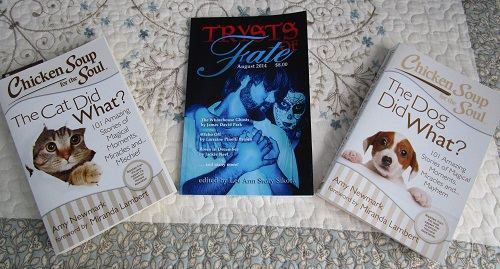
Thankfully, I didn’t listen to those little whispering cockroaches of doubt. I kept submitting to print markets, and finally, it paid off. A few months ago, as I shared right here on ATHF, I received notification that my story “The Greatest Gift” would be published in Chicken Soup for the Soul: The Cat Did What?

But the awesomeness didn’t stop there. A few weeks after that, I got another email from Chicken Soup for the Soul: my dog story, “Legacy,” had been selected to appear in Chicken Soup for the Soul: The Dog Did What?

A few weeks after that, the unimaginable happened: my werewolf story, “Burn,” was accepted to appear in the August 2014 issue of Trysts of Fate, a dark paranormal romance magazine presented by Alban Lake Publishing. A print magazine.

After all those times the dream had slipped away, it seemed just too good to be true. When the hyper excitement wore off, I began to worry that maybe it was too good to be true. Both of these publishers were very reputable, but still, I’d been burned in the past – multiple times. I couldn’t truly let myself believe – not until I could hold the books in my hands. Like, for real.

In mid-July, I got my wish: the first batch of contributor’s copies arrived, and I ran my fingers over the glossy cover of Chicken Soup for the Soul: The Dog Did What? for the very first time. I touched my name on the page, saw my words in print at long last. Less than a week later, I was holding a contributor’s copy of Chicken Soup for the Soul: The Cat Did What?, caressing the pages, smelling the crispness of fresh ink on paper. Then, about a month after that, my third baby arrived. Trysts of Fate was just as glossy as the other two, the striking cover art looking even better in person than it had on the publisher’s website. There was even something special about just knowing that they were advance copies – something most people weren’t able to read or touch just yet.

Nowadays, of course, anyone can hold my babies. Anyone can read them. The Chicken Soup books officially came out on August 19th, and can be purchased in bookstores and online. The August 2014 issue of Trysts of Fate is available in Alban Lake Publishing’s online store.

The dream has finally, officially come true. And in the process, two other dreams got fulfilled, as well: 1.) I got a non-fiction story published for the first time, and 2.) I got published in a book with one of my absolute favorite authors: Beth Cato. (Her wonderful stories “Welcome to the Navy” and “All About the Balloon” also appear in Chicken Soup for the Soul: The Cat Did What?)

So, now that I’ve had a month or so to bask in the glory, what’s next?

More dreams, of course! I have so many waiting in the wings: do a non-profit book signing, run a workshop with my writing group, finish my nano novel (yeah, still working on that…I think it’s become a trilogy at this point), have one of my stories illustrated, write a TV pilot, write a spec script for Castle, write a movie script, attend the Austin Film Festival, and of course the biggie – become a published novelist!

But that’s just me – what about you? What are your writing dreams, and how are you pursuing them? Maybe the only difference between a dream and a goal is doing something to make it happen…or simply not giving up the hope that it actually could.

Whatever your dream is, don’t give up on it. Even when Fate seems to be telling you, in a firm and convincing voice, that things are simply not going to work out for you. Sometimes there’s a nice surprise – or three – waiting just around the corner. 🙂

Keep writing!

-Gretchen

Reflections on NaNoWriMo

First of all: I did it! Woo hoo! I met my goal! 🙂 Well, kind of. I wrote 50,000 words of fiction in thirty days, which was the main challenge. Unfortunately, the 50,000th word did not neatly coincide with the end of my book. So technically, I can’t claim that I wrote a complete novel in one month – which would have been awesome. Nonetheless, I feel like a winner. 🙂

A Crazy Idea

Last year, writing 50,000 words in a month seemed crazy and unattainable. I didn’t even consider participating. This year, things felt different. I felt different. Early in the spring, I started flirting, only semi-seriously, with the idea of going for it.

Then came the story idea. I was reading my copy of Chicken Soup: Inspiration for the Writer’s Soul (which, incidentally, features a wonderful story by one of my very own writing group members!) and this awesome plot just came to me. I knew right away that it was too involved to be limited to a short story. I also knew that I was too busy with other projects at that particular moment to write it. But November, aka National Novel Writing Month, was only seven short months away… 🙂

A Rude Awakening

By the end of May, I was strongly committed – in my own mind, at least – to writing my novel during the NaNoWriMo craziness. Little by little, I was figuring out who the characters were, how they related to one another, and how the plot would unfold. The more planning I did, the more excited I became. Then, on the very last day of May, life took an unexpected, high-speed turn: a bolt of lightning struck my parents’ farmhouse, destroying the place we had called home for over a decade.

No humans or pets were harmed, which is the only thing that really matters. But many of our possessions were lost, and the house itself was not habitable – both of which put a major strain on our day-to-day activities. For weeks, just getting through my chores, getting to work, and getting back to my brother’s house (where we were given every amenity and kindness you could imagine) took all the strength I had. Writing every day became a dim memory. Writing once every two weeks or so became the new, discouraging norm. And NaNoWriMo, that precious promise I had made to myself, started to look like it was never going to happen.

Rebuilding

They say time heals all wounds. I don’t know about that, but time did, at least in my case, make things better. Although we could not move back into our home, we were able to move back onsite, which eliminated the grueling back-and-forth travel time that was eating up all of my potential writing sessions. I began to produce stories again, and my heart sang like an un-caged canary. Little by little, November, and everything it stood for, started coming back into focus.

No Excuses

Of course, as with any plan, there were some complications. The biggest one was our estimated move-in date: Thanksgiving. Moving back into our house at the very end of NaNoWriMo seemed like a recipe for failure. I would be scrambling to finish a 50,000-word novel while simultaneously attempting to pack up and move my belongings, clean out our temporary house, and make sure all of the pets felt settled and safe in their new/old home. I hadn’t yet told anyone in my family about my planned NaNo participation, and the timing was a big reason why. They would think I was nuts! That, or, they would tell me not to do it. (I think I was more afraid of the second thing.)

Nonetheless, my commitment continued to strengthen throughout August, and by the end of the month, I’d made my decision: I didn’t care what the move-in date was. I didn’t care what anyone said. I wasn’t going to let the fire – or anything else – be an excuse for giving up on something that important to me. I was going to do it.

Breaking the News

So, you’ve decided to participate in National Novel Writing Month. What are you going to do next? Break the news to your family and friends that you’ll be uncommunicative, tired, grumpy, stressed, and pretty much constantly on the verge of tears for thirty straight days. Sound fun? 🙂 Not really, but it has to be done.

I told my mom, first. I told her in that soft, hesitant voice I always use when I’m saying a secret out loud for the first time. It made me sound weak, even though I wasn’t. I was strongly committed, and by mid-September, Mom was coming to terms with my decision. I asked her quietly for support, and she said she would give it. By the time that month’s writing group meeting came around, I was ready to make my announcement.

To my surprise, though, somebody else beat me to it – right near the start of the meeting, one of my group members asked, “Is anyone doing National Novel Writing Month this year?” My hand shot into the air so fast I could feel the breeze. My group member told me she’d already signed up online. She also told me some of the official rules – like, that I could have an outline for my story already written, and that I could also write character descriptions prior to November 1st. Just no actual prose. Now, I had a writing buddy to conspire with, and a new short-term goal: get my outline and character descriptions charged up and ready to launch by the first day of November.

Buckling Down

At home, I languished over the physical, mental, and emotional details of each of the characters who would populate my novel. Two new characters sprang to life unexpectedly, one of whom became vital to the story. I basked in the joy of his discovery. At writing group, I used our October session to hand write a complete outline for the novel – something that I never enjoy doing, but am always, ALWAYS grateful for later on. I also took the time to think about my weaknesses as a writer. I narrowed the list down to three main things that I wanted to improve on during the writing of my NaNo novel: writing better character descriptions, using all five senses to describe scenes, and keeping up a fast and exciting pace throughout my story. Having all that “grunt work” out of the way only made me that much more excited to start writing.

Near the end of October, I took the final step. Maybe the biggest one of all. I signed up online as an official participant in National Novel Writing Month. Finally, after months of hoping, dreaming and planning, there was only one thing left to do: wait.

Galloping Out of the Gate

There are several things that helped me succeed in reaching my NaNoWriMo goal. The most important one, I think, is that I LOVE my story idea. I could not wait to write it. I physically ached at having to hold myself back. In the weeks prior to November 1st, my excitement grew to the point where I felt ready to pop like a pin-stuck helium balloon.

Another helpful element (though this was not entirely intentional): I had not written any new fiction in months. That’s right, MONTHS. Since April, I’d been focused on writing and submitting a series of non-fiction stories for the Chicken Soup books. And, much as I love all the unique challenges of writing non-fiction, fiction is where my heart truly lives. And by November, my heart was starved for it. My heart was shriveled and barely beating, it needed fiction so bad. So when that starting gate finally opened, and I sat down for that very first writing session, my heart swelled back to life, and my fingers flew. I easily made my first day’s goal of two thousand words, and by Day Five, I’d exceeded ten thousand.

Writing With Wild Abandon

One of the challenges of NaNoWriMo is that you’re supposed to write with wild abandon. I really think I embraced this…on Day One. I threw myself into the story and told myself not to delete anything, not to go back and edit, to just set the words free and keep going. It was the only way I thought I’d be able to reach 50,000 words.

When I reached my Day One goal so easily, though, I started to think, maybe, just maybe, 50,000 wasn’t going to be so hard, after all. By Day Four, I was pretty much back into old habits. I spent extra time fussing over the perfect adjective. If something didn’t sound right, I went back and rewrote. The result: my writing sessions got longer and longer each day, even though I was producing the same number of words. I was trying to create a better product, but it definitely cost me.

If I had managed to hold onto that carefree style of Day One, I might have completed more than just 50,000 words by Day Thirty – I might have completed an entire novel. There’s more to it than just length, though – I had an opportunity to try something bold and new with my writing, and instead I retreated back into the warm safety of my comfort zone. I wrote, for the most part, as I have always written. Whether my novel is better or worse because of that is something I’ll never know.

Obstacles

Of course, if NaNoWriMo was easy, then it wouldn’t be considered a challenge. After essentially breezing through the first week of writing, the stresses and commitments of real life – work, school, family events, chores – started to take their toll. I also began to feel the fatigue associated with my long-@$$ writing sessions. Family members lost patience with me for interfering with their daily schedules, and I began to wonder if it was all worth it.

By mid-month, I’d completely abandoned the two thousand words per day quota, and had simply written a few new goals on the calendar: 30,000 words by November 21st, 40,000 words by the 25th, 50,000 by the last day of the month. If didn’t matter that I was no longer meeting my daily goals – as long as I could dig deep and reach the goals written on the calendar, I’d still make it. And, as a matter of fact, I did reach the 30,000 mark on schedule. But somewhere between 30,000 and 40,000 my new system fell apart. I did not hit 40,000 on the scheduled day. Or the day after. Or the day after that.

Desperation began to creep over me like cold egg yolk. I started getting up crack-of-dawn early to hammer at my manuscript. It helped somewhat, but with a special family gathering on Thanksgiving, plus work the day before and the day after, my word-count deficit continued to grow. When I woke at six a.m. on Saturday, November 30th, I still had over 6,500 words left to write – and only one day to make it happen.

Race to the Finish Line

6,500 words in under eighteen hours seemed impossible. Seriously, climbing Mount Everest was looking like a more realistic goal at that point. Never mind that I couldn’t even spend all of those hours writing – my chores weren’t going to go and do themselves. I got my farm work done as quickly as possible and settled in to write. And write. And write. I chipped away at my word count in little chunks, writing for as long as I could bear it before checking the numbers again.

Sixty-five hundred gradually became six thousand, then fifty-five hundred. My back started to ache, and I got up to walk around every hour or so to prevent blood clots. My dad’s 13-year-old laptop became so overheated that it took several long moments to respond to commands. But it wasn’t crapping out entirely, and neither was I.

When I reached the two thousand word mark, I had a decision to make. I knew I could finish, but it would take several more grueling hours of work. By the time my word count reached 50,000, it would be too late to drive to someplace with Internet access and upload my novel to the NaNoWriMo site for validation. And I really REALLY wanted validation. Like, SO bad. I had given up so much for this. Time, energy, food, sleep. My mom had grudgingly watched hours of TV on mute so I could work. And now I wasn’t even going to get my prize for finishing?

It was a hard pill to force down, and I admit, some dirty thoughts entered my head. It would’ve been easy to tack on a few previously-written short stories to the end of my novel, drive to McDonald’s, and use their wi-fi to upload my “50,000 words.” But doing so would have wasted time – time I needed in order to finish writing my 50,000 – for real – by midnight. So, I could cheat and get my prize, or I could let go of the prize and keep the commitment I made to myself.

In the end, I guess it wasn’t such a hard decision after all. At a little after 11:30pm on November 30, 2013, after nearly eleven hours of continuous writing, my novel’s word count read 50,005. Proud and exhausted, I announced to my mother I had done it, backed up my work on my flash drive, and let my dad’s poor decrepit laptop have its much-deserved siesta.

Life After NaNoWriMo

The first thing Mom said to me, after “Good job,” was “You are NEVER doing this again.” Initially, I agreed with her assessment. It was a wonderful and unique experience, but it definitely didn’t come free. All of the things I let slide for a whole month came back to haunt me with a Ghost Of Christmas Past vengeance. It was overwhelming, trying to make up for lost time in other areas of my life. Reality bites, and sometimes it’s rabid. I’m STILL not all caught up on everything I neglected last month.

But I do have to admit, as things start to calm down and normal life filters back in, that a part of me actually misses those crazy-long writing sessions. I miss galloping through the set-up portion of my book and diving headlong into the action. I miss watching my story grow like a Chia Pet on fast forward. As difficult and insane as NaNoWriMo was, it did something for me that no one or thing had ever done before: it gave me permission to put my writing first. For thirty whole days, I got to say “yes” to my novel and “no” to almost everything else. Dictionary.com should write a new definition for “liberating.”

I’m still working on my NaNo novel, but progress these days is slow. Like, glacier-mates-with-a-snail slow. Before NaNoWriMo, I would have been happy with writing four or five hundred words a week. Now, I know just how much more I am capable of. And it might be nice to push myself like that again someday, to really crack down and get things done. So, yeah, now that I’ve had a few weeks to recover, I’d totally consider doing NaNoWriMo again. No question.

Just, uh, don’t tell my mom…

The Cool Thing Rule

When it comes to writing, we all seem to have different ideas about what makes a good, productive session. One author I read about has to write a minimum of five pages per day in order to feel like she’s reached her goal. Another writer measures his success by word count – nothing less than a 4,000-word session will do. Other authors choose to focus more on the time put in than the amount of product churned out – as long as they spend a solid hour writing every day, then they feel like they’ve accomplished something.

As for me, I’m not nearly so strict. I’ve never set a word- or page-count goal, nor do I make myself write for a specific duration of time. If I’ve set aside two hours to write, and I happen to reach a natural stopping point after only an hour-and-a-half, then I’m punching out for the day. I’m not going to force myself to start a new scene or a new chapter just because I still have time left on the clock. Same goes for page count – on my best days, I can spew out about two-and-a-half pages, single-spaced. On my worst days, though, when I’ve been wrestling with a difficult scene or some stubborn dialogue, I might reach my limit after only a few paragraphs. If I try to push any further, the writing quality begins to drop. My creative thinking skills plummet off the edge of the Grand Canyon, my brain starts waving the white flag, and I know it’s time to close the laptop.

But if there’s no set word count, no predetermined number of pages, and no specific time window, how do I know that I’ve met my writing goal for the day? The answer: The Cool Thing Rule. Years ago, I was watching the special features on one of my Smallville DVDs (go ahead, you can say it: geeeeeeeek), and the guy in charge of the show’s computer-generated effects said something interesting. He said that as the FX team prepared to shoot each episode, they would always try to come up with at least one effect that made them say, “Wow, it would be really cool if we could pull that off…”

I apply this same concept to my writing. I may not be required to write a certain number of pages each session, but I do have to write at least one Cool Thing. This Cool Thing might be a particularly poetic description, a funny line of dialogue, a unique and quirky simile, or something else entirely, but it has to be Really Cool. And there is no cheating when it comes to this rule – the Cool Thing can’t be something I came up with the night before, or earlier that day when I was out mucking horse stalls. The Cool Thing must be something that sprouts up organically during the day’s writing session, completely unexpected and unplanned. Something that gives my heart a little caffeine-jolt of excitement as the words flow across the screen. Something I can look back on, when I’m done writing, and think, Yeah, I made progress. I wrote something Cool today.

So, that’s how I measure a good, productive writing session – not in words or in hours, but in Cool Things.

How about you?