First of all: I did it! Woo hoo! I met my goal! 🙂 Well, kind of. I wrote 50,000 words of fiction in thirty days, which was the main challenge. Unfortunately, the 50,000th word did not neatly coincide with the end of my book. So technically, I can’t claim that I wrote a complete novel in one month – which would have been awesome. Nonetheless, I feel like a winner. 🙂
A Crazy Idea
Last year, writing 50,000 words in a month seemed crazy and unattainable. I didn’t even consider participating. This year, things felt different. I felt different. Early in the spring, I started flirting, only semi-seriously, with the idea of going for it.
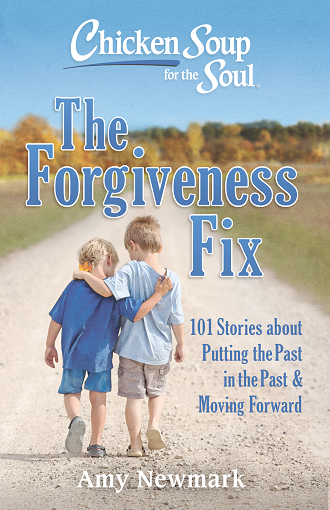
Then came the story idea. I was reading my copy of Chicken Soup: Inspiration for the Writer’s Soul (which, incidentally, features a wonderful story by one of my very own writing group members!) and this awesome plot just came to me. I knew right away that it was too involved to be limited to a short story. I also knew that I was too busy with other projects at that particular moment to write it. But November, aka National Novel Writing Month, was only seven short months away… 🙂
A Rude Awakening
By the end of May, I was strongly committed – in my own mind, at least – to writing my novel during the NaNoWriMo craziness. Little by little, I was figuring out who the characters were, how they related to one another, and how the plot would unfold. The more planning I did, the more excited I became. Then, on the very last day of May, life took an unexpected, high-speed turn: a bolt of lightning struck my parents’ farmhouse, destroying the place we had called home for over a decade.
No humans or pets were harmed, which is the only thing that really matters. But many of our possessions were lost, and the house itself was not habitable – both of which put a major strain on our day-to-day activities. For weeks, just getting through my chores, getting to work, and getting back to my brother’s house (where we were given every amenity and kindness you could imagine) took all the strength I had. Writing every day became a dim memory. Writing once every two weeks or so became the new, discouraging norm. And NaNoWriMo, that precious promise I had made to myself, started to look like it was never going to happen.
Rebuilding
They say time heals all wounds. I don’t know about that, but time did, at least in my case, make things better. Although we could not move back into our home, we were able to move back onsite, which eliminated the grueling back-and-forth travel time that was eating up all of my potential writing sessions. I began to produce stories again, and my heart sang like an un-caged canary. Little by little, November, and everything it stood for, started coming back into focus.
No Excuses
Of course, as with any plan, there were some complications. The biggest one was our estimated move-in date: Thanksgiving. Moving back into our house at the very end of NaNoWriMo seemed like a recipe for failure. I would be scrambling to finish a 50,000-word novel while simultaneously attempting to pack up and move my belongings, clean out our temporary house, and make sure all of the pets felt settled and safe in their new/old home. I hadn’t yet told anyone in my family about my planned NaNo participation, and the timing was a big reason why. They would think I was nuts! That, or, they would tell me not to do it. (I think I was more afraid of the second thing.)
Nonetheless, my commitment continued to strengthen throughout August, and by the end of the month, I’d made my decision: I didn’t care what the move-in date was. I didn’t care what anyone said. I wasn’t going to let the fire – or anything else – be an excuse for giving up on something that important to me. I was going to do it.
Breaking the News
So, you’ve decided to participate in National Novel Writing Month. What are you going to do next? Break the news to your family and friends that you’ll be uncommunicative, tired, grumpy, stressed, and pretty much constantly on the verge of tears for thirty straight days. Sound fun? 🙂 Not really, but it has to be done.
I told my mom, first. I told her in that soft, hesitant voice I always use when I’m saying a secret out loud for the first time. It made me sound weak, even though I wasn’t. I was strongly committed, and by mid-September, Mom was coming to terms with my decision. I asked her quietly for support, and she said she would give it. By the time that month’s writing group meeting came around, I was ready to make my announcement.
To my surprise, though, somebody else beat me to it – right near the start of the meeting, one of my group members asked, “Is anyone doing National Novel Writing Month this year?” My hand shot into the air so fast I could feel the breeze. My group member told me she’d already signed up online. She also told me some of the official rules – like, that I could have an outline for my story already written, and that I could also write character descriptions prior to November 1st. Just no actual prose. Now, I had a writing buddy to conspire with, and a new short-term goal: get my outline and character descriptions charged up and ready to launch by the first day of November.
Buckling Down
At home, I languished over the physical, mental, and emotional details of each of the characters who would populate my novel. Two new characters sprang to life unexpectedly, one of whom became vital to the story. I basked in the joy of his discovery. At writing group, I used our October session to hand write a complete outline for the novel – something that I never enjoy doing, but am always, ALWAYS grateful for later on. I also took the time to think about my weaknesses as a writer. I narrowed the list down to three main things that I wanted to improve on during the writing of my NaNo novel: writing better character descriptions, using all five senses to describe scenes, and keeping up a fast and exciting pace throughout my story. Having all that “grunt work” out of the way only made me that much more excited to start writing.
Near the end of October, I took the final step. Maybe the biggest one of all. I signed up online as an official participant in National Novel Writing Month. Finally, after months of hoping, dreaming and planning, there was only one thing left to do: wait.
Galloping Out of the Gate
There are several things that helped me succeed in reaching my NaNoWriMo goal. The most important one, I think, is that I LOVE my story idea. I could not wait to write it. I physically ached at having to hold myself back. In the weeks prior to November 1st, my excitement grew to the point where I felt ready to pop like a pin-stuck helium balloon.
Another helpful element (though this was not entirely intentional): I had not written any new fiction in months. That’s right, MONTHS. Since April, I’d been focused on writing and submitting a series of non-fiction stories for the Chicken Soup books. And, much as I love all the unique challenges of writing non-fiction, fiction is where my heart truly lives. And by November, my heart was starved for it. My heart was shriveled and barely beating, it needed fiction so bad. So when that starting gate finally opened, and I sat down for that very first writing session, my heart swelled back to life, and my fingers flew. I easily made my first day’s goal of two thousand words, and by Day Five, I’d exceeded ten thousand.
Writing With Wild Abandon
One of the challenges of NaNoWriMo is that you’re supposed to write with wild abandon. I really think I embraced this…on Day One. I threw myself into the story and told myself not to delete anything, not to go back and edit, to just set the words free and keep going. It was the only way I thought I’d be able to reach 50,000 words.
When I reached my Day One goal so easily, though, I started to think, maybe, just maybe, 50,000 wasn’t going to be so hard, after all. By Day Four, I was pretty much back into old habits. I spent extra time fussing over the perfect adjective. If something didn’t sound right, I went back and rewrote. The result: my writing sessions got longer and longer each day, even though I was producing the same number of words. I was trying to create a better product, but it definitely cost me.
If I had managed to hold onto that carefree style of Day One, I might have completed more than just 50,000 words by Day Thirty – I might have completed an entire novel. There’s more to it than just length, though – I had an opportunity to try something bold and new with my writing, and instead I retreated back into the warm safety of my comfort zone. I wrote, for the most part, as I have always written. Whether my novel is better or worse because of that is something I’ll never know.
Obstacles
Of course, if NaNoWriMo was easy, then it wouldn’t be considered a challenge. After essentially breezing through the first week of writing, the stresses and commitments of real life – work, school, family events, chores – started to take their toll. I also began to feel the fatigue associated with my long-@$$ writing sessions. Family members lost patience with me for interfering with their daily schedules, and I began to wonder if it was all worth it.
By mid-month, I’d completely abandoned the two thousand words per day quota, and had simply written a few new goals on the calendar: 30,000 words by November 21st, 40,000 words by the 25th, 50,000 by the last day of the month. If didn’t matter that I was no longer meeting my daily goals – as long as I could dig deep and reach the goals written on the calendar, I’d still make it. And, as a matter of fact, I did reach the 30,000 mark on schedule. But somewhere between 30,000 and 40,000 my new system fell apart. I did not hit 40,000 on the scheduled day. Or the day after. Or the day after that.
Desperation began to creep over me like cold egg yolk. I started getting up crack-of-dawn early to hammer at my manuscript. It helped somewhat, but with a special family gathering on Thanksgiving, plus work the day before and the day after, my word-count deficit continued to grow. When I woke at six a.m. on Saturday, November 30th, I still had over 6,500 words left to write – and only one day to make it happen.
Race to the Finish Line
6,500 words in under eighteen hours seemed impossible. Seriously, climbing Mount Everest was looking like a more realistic goal at that point. Never mind that I couldn’t even spend all of those hours writing – my chores weren’t going to go and do themselves. I got my farm work done as quickly as possible and settled in to write. And write. And write. I chipped away at my word count in little chunks, writing for as long as I could bear it before checking the numbers again.
Sixty-five hundred gradually became six thousand, then fifty-five hundred. My back started to ache, and I got up to walk around every hour or so to prevent blood clots. My dad’s 13-year-old laptop became so overheated that it took several long moments to respond to commands. But it wasn’t crapping out entirely, and neither was I.
When I reached the two thousand word mark, I had a decision to make. I knew I could finish, but it would take several more grueling hours of work. By the time my word count reached 50,000, it would be too late to drive to someplace with Internet access and upload my novel to the NaNoWriMo site for validation. And I really REALLY wanted validation. Like, SO bad. I had given up so much for this. Time, energy, food, sleep. My mom had grudgingly watched hours of TV on mute so I could work. And now I wasn’t even going to get my prize for finishing?
It was a hard pill to force down, and I admit, some dirty thoughts entered my head. It would’ve been easy to tack on a few previously-written short stories to the end of my novel, drive to McDonald’s, and use their wi-fi to upload my “50,000 words.” But doing so would have wasted time – time I needed in order to finish writing my 50,000 – for real – by midnight. So, I could cheat and get my prize, or I could let go of the prize and keep the commitment I made to myself.
In the end, I guess it wasn’t such a hard decision after all. At a little after 11:30pm on November 30, 2013, after nearly eleven hours of continuous writing, my novel’s word count read 50,005. Proud and exhausted, I announced to my mother I had done it, backed up my work on my flash drive, and let my dad’s poor decrepit laptop have its much-deserved siesta.
Life After NaNoWriMo
The first thing Mom said to me, after “Good job,” was “You are NEVER doing this again.” Initially, I agreed with her assessment. It was a wonderful and unique experience, but it definitely didn’t come free. All of the things I let slide for a whole month came back to haunt me with a Ghost Of Christmas Past vengeance. It was overwhelming, trying to make up for lost time in other areas of my life. Reality bites, and sometimes it’s rabid. I’m STILL not all caught up on everything I neglected last month.
But I do have to admit, as things start to calm down and normal life filters back in, that a part of me actually misses those crazy-long writing sessions. I miss galloping through the set-up portion of my book and diving headlong into the action. I miss watching my story grow like a Chia Pet on fast forward. As difficult and insane as NaNoWriMo was, it did something for me that no one or thing had ever done before: it gave me permission to put my writing first. For thirty whole days, I got to say “yes” to my novel and “no” to almost everything else. Dictionary.com should write a new definition for “liberating.”
I’m still working on my NaNo novel, but progress these days is slow. Like, glacier-mates-with-a-snail slow. Before NaNoWriMo, I would have been happy with writing four or five hundred words a week. Now, I know just how much more I am capable of. And it might be nice to push myself like that again someday, to really crack down and get things done. So, yeah, now that I’ve had a few weeks to recover, I’d totally consider doing NaNoWriMo again. No question.
Just, uh, don’t tell my mom…




 as the HERO flies...