Indie Publishing: Published (Finally!)

First things first: my debut novel is published. Like, for real. The official “birthday” for the eBook was January 1st, 2022. Its nearly identical twin, the paperback, was born the following day. Instead of announcing this joyous occasion to the world, my first instinct was to keep it a secret while I made sure everything was okay. Call me paranoid, but I had so many formatting problems – particularly with the eBook – that I figured it was better to be on the safe side than the “filled with horrific errors” side. I bought a copy of the physical book, and while that was being printed and shipped, I checked out the eBook on the few devices we own. Aside from an odd white border around the eBook cover (which has since been corrected), everything looks good.

So, it’s out there, and now I feel…weird. Not in a bad way. More in an “Okay, now what?” way. I mean, this book has been with me almost my entire adult life – all the way from that little spark of an idea I had over seventeen years ago, while talking to my brother in the parking lot after watching the movie Spider-Man 2. Just hearing how much those characters meant to him, and realizing how much they mean to so many people. The escape they offer. The hope they give.

That little spark led to sticky notes on my wall, which led to a handwritten, 300Kword first draft (three years to write, another two just to type). Once the word processing was complete, I remember feeling pretty smug about my own awesomeness. Then I started to read the book, and actually shed tears over how bad it was. At least, the early part of the book was bad. Towards the middle, when I learned not to describe in detail every time a character blinked or inhaled/exhaled, it got a little better. By the end, the writing was halfway decent but still a far cry from publishable.

I got painful but extremely valuable notes from my mom (who else but a mother would read a 1,500-page, not-so-well-written manuscript?). I revised, cut 100K words, revised again, got more notes from Mom and a few from my newly formed writing group. Sometimes, I’d let the book sit for months or even years as I worked on other projects, strengthening my craft. But I would always come back, cutting, polishing, searching for that diamond I knew was in there. When I finally got it down to 150K, I felt I’d hit a wall. I needed help to break through that last barrier, and found it in an amazing critique partner named Anna, who read the book with her then ten-and-a-half-year-old son and gave me the fresh perspective I so badly needed. Boring scenes, cut. Target age group, decided. Another 57K, gone.

So, yeah, this book has been over seventeen years in the making. But really, I think the story has been with me for even longer.

It might’ve started when I was in seventh grade, standing outside the main office at my junior high school, clutching a folded letter addressed to my band teacher. I paced for a good ten minutes, sweat soaking through my Mickey Mouse t-shirt, before finally darting inside and placing the note in my teacher’s mail cubby. Then I high-tailed it out of there, wondering if I’d just made the biggest mistake of my young life. Wondering if my teacher would believe me about the terrible things some of my classmates were doing to me behind her back – words I had to write, because I couldn’t say them out loud.

Amazingly, she did.

Or, maybe it started even earlier than that, when I was a small child watching X-Men cartoons with my brother in the mornings, then spending the afternoons jumping off the back deck with a garbage bag parachute, chasing the thrill of that gravity-defying moment of lift before the inevitable crash down to earth. Didn’t matter how many times my knees buckled, or my teeth clacked together, or my feet ached from that jarring impact. It was all worth it for that one little second of something more. That one instant when I felt like I was flying, even though such things are not possible in the “real world.”

I wrote this book for that little girl. I wrote it for any kid who’s ever tied a red blanket around his/her/their neck and pretended to be a superhero out fighting the bad guys. I wrote it for all the kids who are standing outside an office right now, holding a letter filled with words they can’t say out loud. And I wrote it for everyone – young, old, or anywhere in between – who believes that inside each ordinary person lies an extraordinary one, just waiting to break free.

I hope you guys love it.

~G

Indie Publishing: Cover Art Reveal!

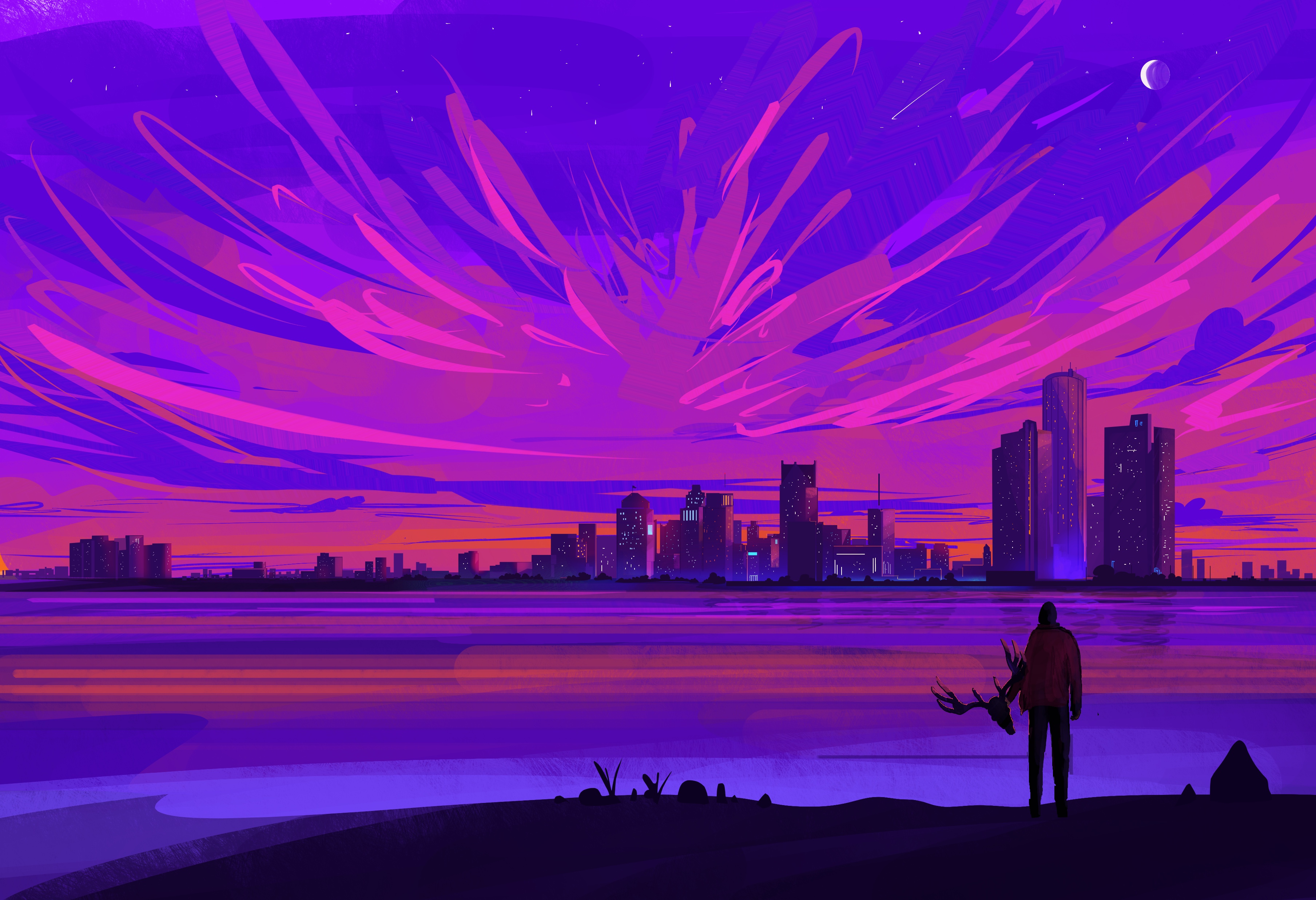
The artist who created the gorgeous image you see above is the insanely talented Muhammad Nafay. Please check out more of his breathtaking artwork on his Instagram or his page on ArtStation. Your eyes will thank you for it, trust me. 🙂 Then, once you’re finished soaking in all the pretty, read about my journey to finding the perfect cover art (and artist!) for my debut novel.

The Hunt Begins

My search began on websites that feature premade cover art. There are numerous advantages to purchasing art that is already created, the top two being: 1.) you know EXACTLY what you’re getting, and 2.) it tends to be more affordable, oftentimes around $60-75 for an eBook cover, a bit more for a wraparound paperback cover (if you’re doing a print book, definitely get the wraparound – believe me, it’s worth it). Below are some of the sites I searched, and they all had a wide selection of excellent work:

I had SOOOO much fun looking at all the amazing covers. I found potential book covers for several of my future books as well as possible cover art for novels people in my writing group were working on. I even made an account on SelfPubBookCovers.com so I could bookmark some of my favorite pieces and artists. The first two sites listed above are especially awesome because you can search by genre as well as by specific images you might be interested in. Like, a raven or an alien or a zombie or a tattered American flag. I kind of went a little crazy window shopping. 🙂 Alas, in the end, although I found some “maybes,” I didn’t find a cover that reached off the screen and grabbed me for this particular book. So, I found myself at the next step:

Choosing an Image

I am NOT a digital artist. I will flat-out admit that. If you’ve read this blog before, you’ve probably seen some of my little “illustrations.” To say they are basic would be putting it kindly. Thus, I knew I’d never be able to create my own cover art, but if I was going to commission a piece, I at least needed to be able to tell the artist what I wanted. Which meant I actually had to decide what I wanted. This was not easy and involved several weeks (possibly months) of me playing around in Krita (a free, open source art program I love because I think it’s fairly easy to learn).

I asked everyone who’d read my book about any ideas they might have for the cover image. Then, I made numerous sketches (including some very horrible ones that still give me nightmares – because seriously, a four-year-old could’ve done better #notkidding) and also tried creating some artwork using free-to-download images from Pixabay. Eventually, after all that tinkering, I wound up right back where I started, at the very first sketch I’d made. It was a really close call between that and a piece of vector art that looked pretty cool, but in the end Sketch #1 just felt right. It had the mood I wanted to convey.

Finding the Artist

Now that I had an image in mind, I could finally begin my search for an artist. As someone who’s been beta reading on Fiverr.com for the past few years, I was SUPER excited to contribute to the freelance marketplace as a buyer. There are so many talented artists out there, it’s unbelievable. I wanted to hire them ALL, and had to force myself to focus on the specific mental picture I had in mind and who would be best suited to deliver that image.

When I saw Muhammad’s portfolio for the first time, it truly took my breath away, and honestly, his artwork still does that every time I look at it. Some of the things that struck me about Muhammad’s work were his stunning use of color, his majestic skylines, and the cinematic quality that really makes you aware of how big the universe is. Another thing I noticed about his artwork was that it looked gorgeous and eye-catching even at a thumbnail size, which was really important to me. Also, as you can probably tell from the image above, the deer is an important symbol in my book, and coincidentally a few of Muhammad’s other pieces also had deer in them, so it just seemed like fate. I am beyond lucky he was able to take on my project, and I am absolutely blown away by the results. I gave him a childish scribble and a brief description of my novel, and in return he gave me perfection. 🙂

Lettering and Proof Copies

Once I had my beautiful cover art, I tried my best not to ruin it with awful lettering. I used Krita and KDP’s book cover template (pasted over the art as a new layer with the opacity turned way down) to make sure none of the words went off the page or ventured into forbidden territory, like the bar code area. I just wanted something simple that wouldn’t detract from Muhammad’s brilliant artwork, and I am happy with how it came out. I actually tailored my book description to the amount of space available on the back cover, and in all honesty, it forced me to pare down the word count and I wrote a better, tighter blurb as a result.

The final product, after deleting the template layer in Krita.

Next, I uploaded the book to KDP’s Cover Creator, chose an option that featured the whole cover image (and nothing else), selected a style that only had text (no space for an author photo), then simply deleted all of the text on the template. In other words, I cheated the system :). You do not actually want to use Cover Creator to design your cover – you just cannot manipulate text and images the way you can in a regular art program. The options are very fixed, and that is not a good thing.

Now that the cover and book text were uploaded to my bookshelf, I had one last step: ordering a proof copy to make sure the whole thing had not gone disastrously wrong. This is not as easy as it sounds, people. I’m not joking when I say that I almost accidentally published my book. When it’s late at night, and you’re starting to get confused, bad things happen. Like coming thisclose to hitting the “Publish” button by mistake. My finger actually hovered. Briefly. But something didn’t feel right. So, I did a quick search and found this helpful video which explains how to order proof copies without publishing your book. A true lifesaver!

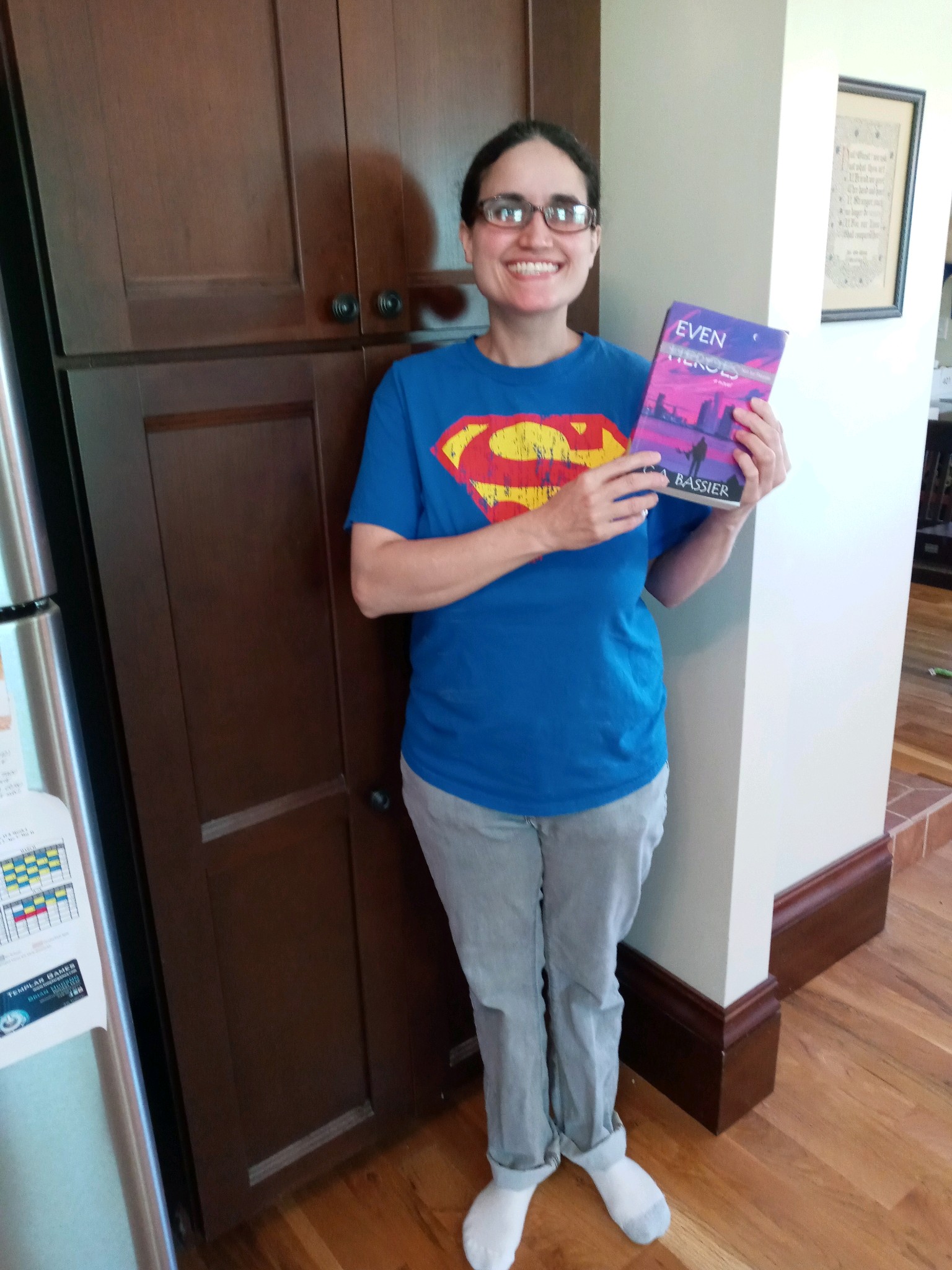
Me, after receiving my first proof copy. For days afterward, I could not stop picking it up and looking at it. 🙂

My first proof arrived really fast, and as you can see from the rather idiotic grin on my face, I was satisfied with how the book came out. Also, as an added bonus, the cost of printing plus shipping and taxes for my proof copy is exactly $11.21. Which, for my fellow X-Philes out there, just felt like a little bit of icing on the destiny cake. 🙂

Coincidence, fate, or a global conspiracy? You decide. 🙂

I hope hope HOPE that I’ll be pushing that scary “Publish” button very soon. In the meantime, thank you for joining me on this crazy but wonderful journey to realize a dream that has been over 15 years in the making.

Love to you all, and Keep Writing!

~Gretchen

Indie Publishing: The eBook Saga

Not So Fast

So, after getting my print book all squared away, I thought I was close to publishing my novel. I just needed to format my eBook, which, thanks to Kindle Direct Publishing’s proprietary software (called Kindle Create), was supposed to be a breeze even for a newbie like me. You just load your Word document into the program, polish up your book so everything looks pretty, and you’ll be good to go. Easy-peasy…right?

To be fair, I think Kindle Create IS reasonably easy to use, and for most people it would be a perfectly good tool to create a lovely Kindle eBook. For me, the problem came when my book showed a glitch in one device mode in KDP’s online previewer. All the other previews looked great, but this weird glitch really had me concerned, so I reached out for help on the wonderful KDP Community forums. Many people responded right away with thoughts and suggestions for getting to the root of the issue.

I tried everything they suggested as well as some of my own ideas. In the course of trying to solve this mysterious glitch, I removed all fixed fonts from my book, uploaded a Word document directly, reformatted my Word doc and tried again (I later learned I did a really horrible job of reformatting it), and eventually, as a last resort, actually learned a little bit about coding (I knew nothing prior to this experience), saved my book as a plain text file, and coded it myself from scratch using HTML and CSS.

Dark Days

When even THAT failed to fix my issue, I contacted KDP technical support for assistance. They were very nice and worked hard to figure out what I was seeing in that one wonky preview, but ultimately came up with bupkis, and left me feeling like they might not even believe that I had seen anything abnormal in the first place (despite numerous screen caps showing the issue). I’m not going to lie to you, people – things were looking pretty dark at that point. My life had been on hold for months, and I just had no idea how to move forward.

A Helping Hand

Desperate and out of options, I turned to the KDP Community again, and an amazingly kind, professional eBook formatter named Hitch came to my rescue and offered to look at my files and try to see what was going on. She did an absolutely incredible job combing through my eBook, searching for any dastardly formatting that might be responsible for the glitch.

To date, despite everyone’s best efforts, there is still no known cause for what I am seeing in that one preview. There was a lot of crazy stuff in my Word file (like, a LOT), but nothing that should cause the specific glitch I am experiencing, and nothing in the EPUB file, either. As frustrating as it is, we may never know the answer. BUT, after talking to an experienced pro who has formatted thousands of eBooks, I feel like there is a very good chance the eBook will render correctly out in the real world. In other words, I’m hoping, based on all of the available evidence (including the MOBI version showing up nicely on my Fire), that the glitch is limited to that one preview, and I am ready to move forward with publication. Phew!

The point of this post, however, is not to whine about my eBook woes, but rather to focus on the positives of what I learned as the result of my experience. I learned the basics of coding, which was really fun and massively useful (I’ll have a separate post about this somewhere down the line). I learned how important it is for me to get familiar with Styles/Headings/etc in Word, because not knowing these things can make an anthill-sized task into a Mt. Everest-sized one. And I learned that the indie publishing community is filled with wonderful people who care about newbies and want to help us swim rather than sink in the scary ocean that is Kindle Direct Publishing.

Next Up: Cover Art Reveal! 🙂

Indie Publishing: Fun with Formatting

A Formatting Impaired Writer

Formatting is not my strongsuit. At all. To quote one of my college professors: “I’m not going to mark you down on those last few pages, because obviously something happened and you didn’t intend for it to look like that.” So yeah, formatting and me? Hardly on the best of terms.

When I decided to go the indie route, I had to choose which aspects of the publication process I could handle on my own, and which I would have to shell out $$$ for. And, even though formatting has been the ugly, drooling, Dorito-breath monster in my closet for years, I decided to face the beast head on and at least TRY to format my own book before breaking down and hiring a professional.

Why, you ask? Two reasons:

1.) I am so painfully broke it’s not even funny.

2.) I felt that formatting was something I could actually learn to do well if I put in the time and effort. And, if successful, I would then be able to do it for all of my future books, thereby saving my (hopefully slightly less broke) future self some cash down the line.

As a format-challenged person, learning this skill was sort of like having a root canal minus the novacaine – something I have actually experienced, and yes it hurt like you-know-what. But after countless hair-pulling moments and a few pillow screams, I finally had a book that looked exactly the way I wanted it to. No weird spacing issues. No random alignment gaffes. Blank pages only where I intended them to be (and nowhere else!).

For some people, this might sound easy-peasy. For me, however, this was a Mt. Everest-level accomplishment. And since I know I can’t be alone when it comes to my formatting struggles, I decided to share some of the tips and resources that helped me, along with a few of the issues I considered while formatting my book for print.

Decisions, Decisions

If you decide to format your own manuscript, you’ll be in charge of choosing everything from the actual trim size of the book all the way down to the font size and type, line spacing, and how the first page of each chapter will look.

Some details that might affect these decisions:

-Book Length

-Genre

-Intended Audience

In my case, I have a novel for younger audiences (11-13 years), so an easy-to-read font was paramount. My book is also somewhat long, so I had to take the potential spine width into account as I looked at different trim sizes. The bigger your book’s trim size is, the larger the pages are and the more words you can fit on them. Which means a skinnier spine and a lower printing cost. However, books with extremely large trim sizes can be awkward and uncomfortable for readers to hold. So everything is about finding that right look and right balance for your specific novel. To gain one element, you might have to sacrifice another.

In my opinion, an ideal paperback has a trim size of 5″ x 8″. Because of my book’s length, I had to compromise on this a bit and go with 5.25″ x 8″. If you have a super short book, you might want to go the opposite way and choose the smallest trim size to make your book thicker.

Many professional novels have each chapter start on an odd numbered page, even if it would not naturally fall there. Because my book is long with fairly short chapters, this would have meant including a significant number of unnecessary blank pages. Since I do actually care about trees, I decided not to restrict myself in this way. I also elected to do without the standard header (alternating between author’s name and book title) on each page. Again, this was to save pages and keep the text easy to read.

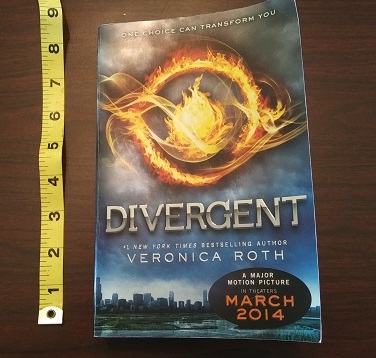
My novel has the same trim size as the paperback edition of Divergent

One thing that’s really beneficial (and also kinda fun) is to take a bunch of books off your shelf and actually measure them. You’ll be amazed at the range of sizes. Flip through each one and sample how their chapter openers look, where the page numbers are, how they display the header and footer, what fonts are used. There are so many different styles! Make a note of which books in your genre have the best “look” and try to emulate that.

If you’re writing a science fiction novel, you might want to use a futuristic font for the chapter headings to give it that sci-fi feel. For a memoir, chapter titles might look cool in a font that looks like handwriting (as long as it’s legible!). If you’re writing a heart-pounding action adventure set on a global stage, you may want each chapter opening to have additional information like what country the characters are in, what time it is, and how many minutes are left until the bomb goes off!

Below are some links and tips to help make your book both beautiful and professional.

Resources

  • This is THE best video ever for formatting your print book in MS Word. This totally saved my life. The author explains everything and makes it all so easy a kindergartner (or me!) could do it. The vid covers common mistakes (and how to avoid them), mirror margins, gutter space, formatting chapter headings using styles, line spacing and more. The only things it doesn’t really touch on are drop caps (those pretty, extra big letters at the start of each chapter) and page/section breaks. But this will give you all the basics and you’ll be in great shape as you move on to some of the more intricate details.
  • Here is a link to KDP’s guide to trim sizes. It also discusses bleed (when you want an image to go off the edge of the page) as well as their recommended margins for different sizes of books. (Tip: go bigger than recommended for the gutter margin).
  • KDP’s instructions for formatting your print book. IMHO, the video posted above is much easier to follow, but there are a few elements here not included on that vid, e.g. the section break stuff, which is really important if you want certain pages NOT to have numbers on them. Page breaks are also important to learn about, especially when it comes time to format your ebook, so definitely don’t skip out on these lessons. The most valuable thing I got out of this page was the last part, which clearly explains how to export your final Word Doc(x) as a pdf, the form it must be in to upload it to your bookshelf.
  • How to delete unwanted blank pages in Word! The method that really saved me was using the navigation pane. Worked every time. 🙂
  • How to create drop caps in MS Word. (FYI, drop caps RULE! They make your book look awesome and professional. Tip: To change the appearance of your drop cap, e.g. how tall it is, click “Drop Cap Options.”)

Have Fun Building Your Book!

Reading about all of these new terms can be overwhelming for a first-timer. It definitely was for me! Just remember that it does get easier. Any problem you have or anything you can’t figure out how to do, just call on your old pals Google, Bing, and YouTube and they will help you find someone who can answer your question. If you want to do something special, like add a map to the beginning of your book, or an image next to each chapter title, or a blank page with just a quote right in the middle, don’t give up simply because it seems too hard. Keep trying until everything looks exactly the way you envisioned. You deserve it, and so does your book. 🙂

Indie Publishing: I Take the Plunge

A collection of indie titles from my bookshelf.

I may not have gotten much writing done during the pandemic. Or much reading. Or much exercising. But I do have ONE claim to productivity over the last year and a half: I’ve been slowly, quietly getting my first novel ready for publication.

The idea of publishing independently has been knocking around in my brain since I attended a workshop on the subject roughly ten years ago. Since then, I’ve participated in several more workshops, read numerous indie-published books, and even interviewed an indie author. The more I learned, the more I liked what I heard:

Complete control over your content. Publishing at your own pace. Earning higher royalties. The freedom that comes with being your own boss. And, probably most important for me: the opportunity to share unique stories that traditional publishing doesn’t want to take a chance on.

One thing that has struck me about most of the indie books I’ve read: They’re special. They’re different. They’re not cardboard cutouts of every other book in their genre. Some of these books experiment with style, structure, or just explore a topic so different from anything I’ve read before that I doubt the authors could come up with a comp title even if someone offered them $50K. As a reader, I find this stimulating, exciting. I like different.

I am different.

Of course, traditional publishing had always been the dream, and letting go wasn’t easy. There will be no advance on royalties, no prestige of having my work get “chosen” by an agent, no NYT Bestseller List bragging rights.

But maybe, just maybe, with a TON of hard work, I’ll earn a small readership who appreciates quality writing that doesn’t quite fit the mold. And maybe, just maybe, one day I’ll get to have an even greater honor than being chosen by any agent or editor:

The honor of being chosen by YOU, the reader.

Best wishes to all, keep writing, and stay tuned for more posts about my publishing journey!

~Gretchen

Get Writing in 2020!

Why aren’t you writing? *sniffle*

Way back in December 2018, we took a look at perfectionism and how that might be crippling your writing and keeping you from reaching your goals. But that’s only one of many possible roadblocks that could be standing in the way of you finishing (or even starting!) your novel. Whatever your personal hangups are, trust me, you are not alone. There are probably thousands of other authors out there struggling with the exact same issues. I myself have been there more times than I care to recall. But no matter what the hurdle was – chaotic life circumstances, lack of time, a dry spell where the ideas just wouldn’t come – I always made it through to the other side, and you can, too!

In the spirit of making this the BEST WRITING YEAR EVER, I’ve compiled a short list of tried-and-true tips to help you find (or rediscover) your writing groove in 2020:


1.) Give Yourself a Gold Star (You earned it!)

I know this sounds silly and a bit juvenile, but in the past six months I’ve taken to putting a sticker on the calendar each time I get some writing done on a given day. Not only does this act give me a tangible reward each time I write, but it also helps me identify trends in my writing schedule that I would never have noticed otherwise. When I see that I’ve only written three days or less in the last week, I know I’m shoving writing to the side too often, and need to prioritize it more. On the flip side of that coin, nothing beats the feeling of looking back on a week with five or six stickers and knowing that I’m really getting the work done. (I haven’t managed a seven-sticker week yet, but it’s always something to strive for!)


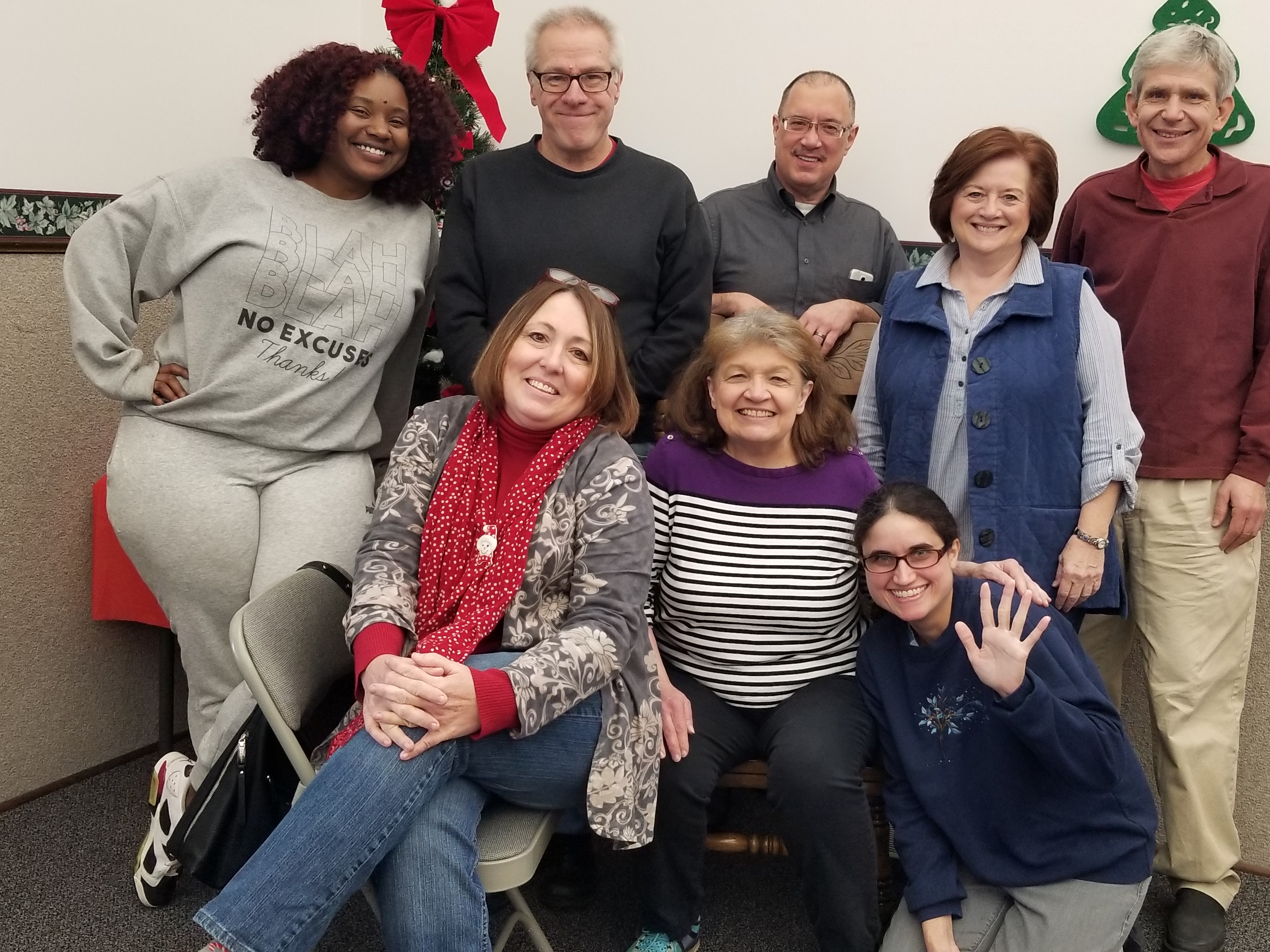
Super-cute picture of my writing group! Photo courtesy of SK Mabry.


2.) Find a Writing Buddy (or Several!)

Just like with exercise routines or attempts to quit smoking, you greatly increase your chances of sticking to a writing schedule if you don’t have to write alone. Your writing partner could be someone you exchange chapters with online as a means of keeping on track, or someone you meet up with in person at Tim Hortons for a weekly writing session. Some great places to find writing partners: online CP match-ups, writing-related message boards, workshops, local writing groups. Don’t have a local writing group? Not a problem. Writers are solitary creatures by nature, but it’s easy enough to lure us out of our caves with the promise of food and being around others who share the same intense passion. Use your local library to put out a call for anyone interested in starting a writing group, and you may be surprised by how many people you connect with, and how invaluable those relationships become. To paraphrase the ghostly voice in Field of Dreams, “If you build it, they will come.”


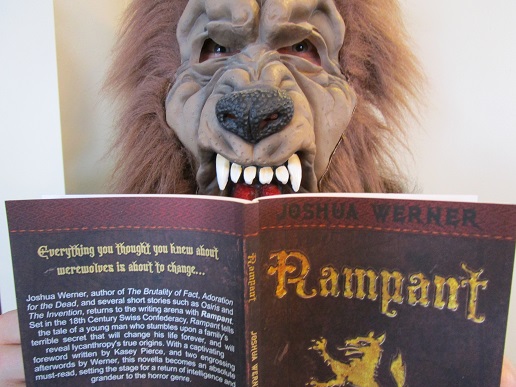
What big eyes you have…to read more books with!

3.) R-E-A-D

The follow-up to the classic advice “Write every day” is, of course, “Read every day.” I know this sounds counter-productive, and it may have some of you rolling your eyes and thinking, Read every day? Are you serious? I can barely scrape enough time together to write a few measly words a week, and now you want to add more reading to my to-do list? Ugh! My short answer to your rather long-winded complaint: Yes. You should read more. Reading not only sharpens your skills as an author and editor, but it can actually make you write more because it’s sending constant sparks of inspiration down those writerly neurons. I’m never more excited to get clattering on that keyboard than when I’m reading something awesome!


This little bugger tries to stop me from writing – but I don’t let him!


4.) Be a Problem-Solver

You’re not writing. You want to be writing. So, what’s stopping you? Being able to identify your own personal writing roadblocks and find solutions to getting over those humps is key. My CP, Anna, has trouble writing at her house because there are too many distractions like laundry, cleaning, etc. Her solution: she takes her laptop to a coffee shop. I sometimes have difficulty writing because my cat, Del, is jealous of my computer (if you have a cat or dog, you know exactly what I’m talking about). He sits underneath the table where I’m trying to work and cries (loudly) for attention. My solution: I take my laptop to the living room and sit on the couch, where he can happily curl up beside me while I write. If you check your email too much instead of writing, consider working on an older machine not capable of going online (yeah, these devices still exist – my laptop, which proudly features Windows Millennium Edition, can attest to this) or even try writing in a notebook instead of on a computer. My point is, if you can figure out what’s holding you back, you can overcome it.


Self-forgiveness. So incredibly hard. So incredibly worth it.


5.) Forgive Yourself

This may be the most important tip of the bunch, and quite possibly the hardest to pull off. We all have bad writing days, weeks, even years. We all have times in our lives when there’s too much personal drama going on, or our work schedule is crazy, or we just plain can’t find the motivation to get words on the page. This is just part of being a writer. Frankly, it’s just part of life. If you beat yourself up every time you don’t write (or every time you try to write but all the words that come out seem to suck), then you are forgetting something very important: that was yesterday. Today is a new day, a fresh start, a clean slate. Forgive and forget any perceived failures. Wash away lingering doubts and let them swirl down the drain at your feet. Today will be better. Today, you will write.

Happy 2020, everybody! Get writing! (I know you can do it!)

~Gretchen


Book Release: The Forgiveness Fix


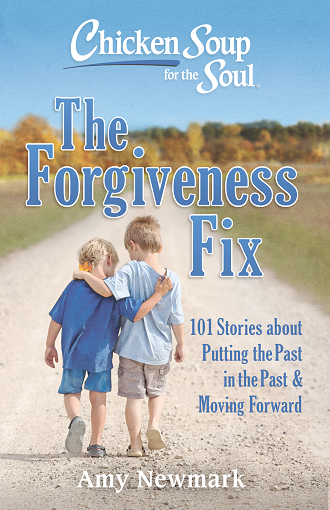
Just wanted to share with y’all that I have a story in the new book Chicken Soup for the Soul: The Forgiveness Fix, which came out today. I had a lot of fun interacting with other contributors at the Twitter book release party this afternoon. As always, there are many amazing stories in this volume. Chicken Soup for the Soul is on a mission to change the world for the better, one story at a time, and it is such a special experience to be a part of that journey.

My story in this book focuses on the idea of trying to understand other people – even the ones who aren’t always kind to us. Because everyone has a reason for the way they behave, and if we take a minute to figure that reason out, or even just imagine what it might be, we become a lot more compassionate – and a lot less angry – in the process.

Like, that guy who tailgated you on the way to work? Or the lady who was screaming at the poor cashier in the grocery store over an expired $0.50 coupon? We have two basic options when we encounter these types of situations:

1.) We can end up fuming over tailgate guy and coupon lady all day, and then complain about them to our families when we get home that night, effectively spreading the misery around to even more people.

Or

2.) We can remember that the tailgater and the coupon screamer are human beings, just like we are. And that they probably have pretty serious problems in their lives which cause them to take their stress out on others. Maybe tailgate guy is in a rush to get home and take care of his terminally ill mother. Maybe coupon lady just lost her job, and every single cent is worth fighting for.

The point is, you never know. And if you ever found out, chances are, you’d be a lot more sympathetic towards that person. That’s what happened to me when I accidentally found out some things about an individual I considered to be my enemy in high school.

In life we encounter a lot of different people, some of them so angry, or bitter, or rude that it becomes easy to forget one simple fact: everyone has pain. Everyone has stress. Everyone has secret suffering they hide from the world because it would be too hard if people knew the truth. That goes for bullies, tailgaters, and grocery store screamers too.

I hope reading this book will take you on a journey that starts with cruelty, hurt, and misunderstandings, and ends with the healing power of forgiveness, and a reminder that everyone deserves – at the very least – the benefit of the doubt.

~Gretchen


A New Scary Story to Tell in the Dark

Growing up, I got to know my brother’s bedroom floor pretty well. I knew all the scratches on his black-painted wooden bedposts, the rectangular shapes made by the interconnected wires holding up his mattress, the worn-out softness of his bedraggled carpet. And no, this isn’t because he pinned me to the floor and made me beg for mercy (that was reserved for when he tied me to the swingset).

I knew my brother’s bedroom floor because I slept there every time he told me a scary story. That was the rule: you scare your sister, you get to deal with her nightmares. Truth be told, I didn’t usually have nightmares after one of his stories (probably because I was too terrified to close my eyes in the first place).

Don’t get me wrong – I was a very willing audience. I BEGGED him to scare me. I especially loved it when he read to me from a particular series of books, the first of which was entitled Scary Stories To Tell In The Dark by Alvin Schwartz.

These books were FANTASTIC. (They actually just came out with a documentary about this series, as well as a feature film based on the first book!)

Back in the day, though, the books were just, well, books. But they were also SO much more. My elementary school friends and I passed around the Scary Stories trilogy like candy. The books terrified us, delighted us, and – most importantly – made us want to read. We had no idea at the time that parents all over the country were complaining about the series, or that the Scary Stories books were actually banned in some places!

Each book featured a collection of short stories that consisted primarily of urban legends from around the world. Some of them you would recognize as classic campfire tales: “The hook,” “High beams,” “The wendigo,” etc. (Basically the first season of Supernatural in the form of a children’s book, LOL.) Some were more obscure. Some weren’t even stories, just creepy vignettes with no real plot (“The thing” comes to mind here). Some were just about leaving a disturbing image imprinted on the reader’s brain…and boy, did they ever!

The entire series had these wonderfully gruesome, dripping-with-gore illustrations by Stephen Gammell that were as much a part of the appeal as the stories themselves. In one recent reprint, Gammell’s illustrations were actually removed and replaced, presumably for being “too intense” for young audiences. The trilogy has since been re-released with the original illustrations (thankfully) restored.

I can’t imagine a Scary Stories book without them!

Nor can I imagine my childhood without those terrifying tales. But as much as I loved reading them (or, even better, having someone else read them to me in full dramatic fashion), I often regretted the decision later, when the house was dark and quiet and all the little floorboard creaks and weirdly-shaped shadows that weren’t noticeable in the daytime suddenly came to life.

Thus, my childhood was a marvelous, ever-repeating cycle of hunger for scary stories followed by intense buyer’s remorse at having read them.

You wish you hadn’t read about me now, don’t you, dear little Gretchen? Mwa-ha-ha-ha!

For better or worse though, those dark, eerie, disturbing tales I shared with my friends as a kid shaped the person I grew up to be. To this day, I still have a special place in my heart for all things spooky and creepy…and I wouldn’t have it any other way. Supernatural, The X-Files, and Grimm are long-time favorite shows of mine. On my calendar, Halloween is circled because it’s one of the most exciting days of the year. And my first-ever published story, a flash fic entitled “Grisly,” is – you guessed it – a horror story.

And now, as the leaves begin to change, and the nights grow longer, I have a new horror story coming out – one that takes me right back to my childhood, and my love-hate-love relationship with those deliciously evil scary stories.

“The Haunted Fleshies” is available now in the September 2019 Issue of The Society of Misfit Stories Presents… and I could not be more thrilled:

https://books.google.com/books?id=c46sDwAAQBAJ&dq=society+of+misfit+stories+presents+issue+3&source=gbs_navlinks_s

https://www.smashwords.com/books/view/956628

The story follows Grace, a little girl much like the one I used to be (and sometimes still am), who can’t get enough of her older brother’s favorite books (even though they scare the pants off her). After a terrifying nighttime encounter in her own backyard, Grace is convinced that the monsters in the books are real, and they’re coming for her. Whether or not she’s right, one thing is for certain: someone – or something – in the neighborhood has a taste for blood.

My hope is that this story will take you back to when you were a kid, sitting around a crackling campfire, swapping tales of hook men and golden arms, and laughing at how silly they are. But then, every so often, you’ll hear a branch snap or some leaves rustle and you’ll glance into the dark woods beyond your fire’s little circle of light, and wonder if maybe, just maybe, something could really be lurking out there.

Happy reading! 😉

~Gretchen

Coming up on ATHF: Book reviews for Knight’s Honor and Plain Dane: Dawn of Power, plus a review of Lucifer Season 4 on Netflix!

Avengers, Supernatural, and the Elusive Happy Ending

Endings are hard.

No matter what the circumstances – happy, heartbreaking, or anywhere in between – it is always difficult to say goodbye to something that’s been a part of your life for years, possibly even decades.

There are a lot of endings happening in my life right now. Just last month, I watched with a pang as James Holzhauer, who’d become a comforting Jeopardy! staple, finally lost to a fellow competitor. Less than a week later, I sat in a crowd of over a thousand people, a huge smile stretching my face as my oldest nephew graduated high school with honors. (A happy ending for sure!)

Sometimes we choose for things to end – like when we quit a horrible, soul-sucking job that was putting us on the fast track to Ulcer-ville. Other times, life makes the choice for us, like when fate snatches away a family member, or a beloved pet leaves us for good.

As I was walking out of Avengers: Endgame, I was thinking about the kind of endings we experience as fans of TV series, books, and movies. More specifically, I was thinking about what obligations the writers of a popular, well-loved franchise have to their fans.

As I left the dark theatre, cool air conditioning, and popcorn-scented air behind me following Endgame, my chest felt hollow – empty. Certainly not the way I wanted to feel after being a loyal Iron Man and Avengers fan for years.

I began to wonder: If I had been writing the story, what would I have done differently? If I’m ever lucky enough to have a series even half as well-loved as Avengers or Harry Potter or Game of Thrones, how do I want my fans to feel at the very end of it all?

In a word: happy.

I want people to close that last book with huge grins on their faces. I want fans to not walk but skip through that parking lot outside the theatre with their hearts full of hope. I want readers and viewers alike to feel satisfied, like the journey we took together led up to something wonderful. Something that tied up all the loose ends. Something that was every bit worth the wait.

With the 15th and final season of Supernatural looming, I’m trying not to think too much about the end and how hard it’s going to be. Avengers: Endgame may have broken my poor, Iron Man-loving heart, but Supernatural has the power to do even worse. The Supernatural writers could crush our souls as easily as Thanos could snap his fingers.

Let’s be honest: losing Supernatural is going to be devastating no matter what happens on our screens in the final moments. There’s no changing that. For me, it will mean saying goodbye to characters who were with me when my mom was in the hospital, seriously ill, and the doctors didn’t even know what was wrong with her.

These are characters I would quote to myself when I was scared or lonely or just plain sad. Characters who’ve made me burst out laughing and ugly cry (sometimes in the same episode!). Sam, Dean, Cass, Jack, Mary, John, Bobby – these people are real to me. They are family.

So, in this time of endings, I implore the Supernatural writers: be gentle. Most fans will be hanging by the thinnest of emotional threads as it is, so please don’t make it worse than it has to be. Don’t pull an Avengers: Endgame. Instead of dropping your fans’ hearts into an industrial-sized meat grinder, reward us for staying with you ’til the very end.

The finale doesn’t have to be some sappy, Log Cabin syrup-fest – that type of ending wouldn’t fit the show, anyway. But it should give some sense of hope…because that does fit the show.

No matter how bleak things got, as long as Sam and Dean still had each other, then there was always a chance. Leave us with that feeling. Leave Sam and Dean alive, and let us imagine that their next adventure is right around the corner, even if we won’t get to see it.

Please, please don’t break our hearts.

There’s enough of that in the real world.

Author Interview: Elaine Bassier, YA Fantasy

Hey all! Recently I was lucky enough to do an interview with my cousin Elaine Bassier, who happens to be a crazy-talented YA Fantasy author. We talked about everything from resources for self-published authors to unicorn mating habits! For loads of writing tips, helpful websites, answers to burning fan questions, and some very tantalizing hints about the two remaining books in her trilogy, please keep reading!


ATHF: Hi, Elaine! Thanks so much for taking the time to do this interview! Before we get started, please tell everyone a little bit about yourself and your books!

Elaine Bassier: I’m the youngest of five siblings. I was born and raised in Elko, Nevada, and I’m going to go ahead and answer the two most frequent follow-up questions I get when people hear that. 1) No, it’s not near Las Vegas (Elko is in the northeastern part of the state) and 2) Yes, it does snow there. I now live in Spokane, Washington. 1) No, it’s not near Seattle (it’s in the eastern part of the state) and 2) No, it’s not always rainy here.

I’m left-handed (and, fun fact, so is Arianna!). I’m an introvert. I love animals. I have a Golden Retriever named Ruby. I’ve never owned a horse, but I took riding lessons on and off growing up and it’s a dream of mine to one day have a few.

I like to write Young Adult fantasy. My debut novel, Knight’s Duty, is the first book in the Unicorn Knight trilogy. It tells the story of a young woman named Arianna, who longs to be a Unicorn Knight. When she comes across a unicorn who lost her knight and learns she has strange magical powers, Arianna and the unicorn agree to partner together. Under the tutelage of her knight-master Flynn, Arianna’s training as a warrior and magic user begin.

ATHF: I read on Goodreads that you started writing The Unicorn Knight trilogy when you were just 12 years old! That’s so amazing, that the story has been with you since childhood. Are there any details that have remained the same from first concept all the way through to the finished product?

EB: This is a great question! I sadly lost the very first draft of the story when our family computer crashed, so I don’t remember a lot of details about it. I so wish I could look at it again! It’s changed quite a bit since I first started.

The one thing that has remained more or less constant since the beginning, though, is the characters. Arianna has always been the protagonist and she’s always looked the same. She’s always been partnered with a unicorn (though initially it was a male unicorn that became Ronan in later drafts instead of the female Serissa). Most of the other characters have kept their names and personalities, too.

ATHF: Is there anything that totally changed from the way you originally imagined it?

EB: The biggest change I remember from the first draft to the published edition is that Arianna was originally a princess trying to reclaim her throne. Obviously, the plot has changed a ton since that initial idea.

The magic system changed pretty drastically from draft to draft as well. It started with humans having the “traditional” fantasy magic. Then it slowly evolved into the concept of the Magickers, where only magical creatures and a few humans have special powers.

ATHF: I really love how you handled the world-building in Knight’s Duty. You wove the details of setting and culture seamlessly throughout the story, rather than telling it all in a big info dump. Do you have any world-building advice for aspiring fantasy authors?

EB: Thank you so much! That’s so kind of you to say. World-building can be a challenge, especially in fantasy books, because most of the time you are literally creating the entire universe your characters inhabit.

I’m lucky because I love learning about mythology and studying other religions, especially ones with a pantheon of gods. One thing I’d recommend to other writers is to really think about the organization of the world. What form of government does the country have? What is the most popular religion?

My world and the country of Failyn really came together once I developed the idea of the Magickers. Each country has more of one [type of] Magicker than the rest, which then influences a lot of the culture of the area.

Figuring out all of this stuff means you’ll know a lot of details that may or may not end up in your books, but that’s okay. The more you know about your world, the more realistic it becomes in your own mind. That familiarity will come across in your writing, even if you’re not sharing specific details.

ATHF: That is great advice! Do you have any tips for writers in general, regardless of what genre they’re working in?

EB: There’s the obvious one (and one I need to follow myself at the moment!): Write! Whatever you’re writing, just keep going!

I also really like the advice from an author I’ll paraphrase here: Write what YOU want to write. For a very long time, you’re going to be the only one reading your work, so make sure you love it. And don’t think your story is too niche – someone out there, probably several someones, is waiting to discover a book just like yours.

ATHF: In the acknowledgements of Knight’s Duty, you mentioned your friends on Wattpad. For those who don’t know, can you tell us about Wattpad? What exactly is it, and how did it impact your journey to publication?

EB: Wattpad is a website where people can post any kind of writing for other people to view for free. Fanfiction is very popular there, but there is also original fiction and even non-fiction and poetry. The quality of the writing and the grammar can vary wildly, but everyone can find something they like.

With that being said, Wattpad is very popular among teens, which is why I chose to first post Knight’s Duty on it. I wanted to build an audience with people in my target demographic.

One particularly awesome feature on Wattpad is the ability to interact with your readers. People can comment on a single line from the text and you can reply. I loved reading people’s reactions to exciting moments in the book and having discussions with them about where they think the story is going.

I will admit that I think Wattpad works better for people who write fanfiction, or post earlier drafts and even things they don’t ever plan on publishing. However, I’ve made a few good friends there who were the first fans of my work outside of my family and that means a lot to me.

ATHF: I think your book cover is beautiful! The silver and blue tones make me think of the unicorns’ coats. Please tell us a little bit about your cover. Who is the artist and how did you find her/him? Did you already have an image in mind for your cover before approaching the artist? What did it feel like, seeing your finished cover for the first time?

EB: Thank you so much! I love all three of the covers I have for the Unicorn Knight trilogy, but the first is my favorite. My cover artist is R.L. Sather, and I found her on an awesome website called SelfPubBookCovers.com. It has hundreds of covers, each one is unique, and once you buy one, the website won’t sell it to anyone else. It also lets you customize the font and title.

I wasn’t really sure what I wanted the cover to look like when I first started trying to find one. I looked at similar book covers to get an idea of what’s popular in the genre. I highly recommend other authors do the same, by the way: we might say not to judge a book by its cover, but the biggest deciding factor in whether someone will consider reading your book or not is the cover. You want to make sure you’re attracting the right readers.

Looking through the options on SelfPubBookCovers.com, I found what would eventually become the covers for Book 2 and Book 3. However, I couldn’t find a third cover that fit with the other two. I wanted all three to have a similar look so people would know they were part of the same series. So, I contacted the artist who did the other two covers and commissioned a custom piece, which ended up becoming Book 1’s cover. The entire process was a whole lot of fun, and it ended up being the push I needed to actually start the publishing process.

Seeing my cover at every stage – when I first bought it and looked at the finished product, when it was posted online on various websites, and especially seeing the paperback version – was incredible. It made the whole process feel real to me and it was so cool to see something that I had created that looked like an actual book.

ATHF: Sounds like an amazing ending to an incredible journey! Going back to the beginning of that journey, do you have a favorite author, and/or someone who really influenced your writing?

EB: One of my favorite authors is Tamora Pierce. I think anyone who has read her earlier work and my own book will see how she has influenced me. She’s also a Young Adult fantasy author and she’s known for creating strong female characters. If you haven’t read any of her books, I recommend starting with Alanna: The First Adventure.

ATHF: Are there any books, websites, or other resources you’d recommend for authors thinking of self-publishing?

EB: Other than SelfPubBookCovers.com, which I mentioned above, I also encourage aspiring self-publishers to check out Amazon’s Kindle Direct Publishing, or KDP. You’re most likely going to publish on Amazon (and maybe other places) once you do publish, and that website has a bunch of resources, including a community where you can talk with other authors.

ATHF: Now that you’ve survived the process of publishing your first book, what is the most important thing you learned from the experience? Is there anything you’ll do differently the second time around?

EB: I wish I had decided to publish sooner! Seriously, I held off on putting my work out in the world for a long time because I was so afraid of what people might think of it and of me. It was a huge hurdle to get over, but once I did, I was astounded by the support I received from everyone, including people I hadn’t had contact with in years. It’s been a dream come true!

ATHF: I’m so glad to hear that :)! Getting back to Knight’s Duty, I will admit to being a hopeless romantic, so of course I noticed a spark of something brewing between Arianna and Flynn. I’m not asking for a definite answer to “will they or won’t they?”, but is there at least a chance of romance between these two in the next installment? Or maybe Book 3?

EB: I’ll keep this one brief because I don’t want to give anything away, but I think readers will be pleased with what happens between Arianna and Flynn in the future. 😉

ATHF: Any possibility for *unicorn* romance on the horizon? Are they romantic creatures, or are they more practical about that sort of thing?

EB: This is a really interesting question and I’m not sure anyone has ever asked me about it before. I don’t want to go into detail for fear of having written myself into a corner later on, but I will say that unicorns don’t magically appear fully formed. They are mammals and have young in the same way normal mammals would. I don’t have any plans to include a romance between unicorns in the trilogy, but I could definitely see myself writing a short story or something in the future about it to explain everything now that you’ve brought it up!

ATHF: LOL! Speaking of creatures, the alphyns were my favorite ones in Knight’s Duty. Were these an original creation of yours, or did they come from somewhere in mythology? Will they appear in Book 2?

EB: Thanks so much! I loved coming up with the magical creatures and what kind of powers they have. It was one of my favorite parts of writing this story.

The alphyns are not an original creation, although my interpretation of them adds some uniqueness. For example, the alphyns in lore are not associated with concealing or tracking magic like the ones in my book are.

I knew early on that I wanted a wolf-like magical creature because I love wolves/dogs. I stumbled across the alphyn while looking up mythical creatures online (I can’t seem to find the website where I first read about them now), and decided I liked the name. It’s actually a Germanic word that means “wolf.”

I think there are fewer mentions of alphyns in book two than there were in the first book, unfortunately, but you will get more of them in the third one!

ATHF: Awesome! When can we expect Book 2, btw? Is there a release date scheduled?

EB: Yes! I’m planning on publishing Knight’s Honor on May 1, 2019! I’m hoping to do something a little different this time and have both the ebook and the paperback available on the same day. (With Knight’s Duty, I published the ebook first and then the paperback about a month later.)

For those of you who just can’t wait or who might like a preview, the first several (unpolished) chapters are on Wattpad. There will be some changes to the Wattpad version compared to the one that’s actually published, but the overall plot will remain the same.

ATHF: Any tantalizing Book 2 tidbits you can tease us with (don’t give TOO much away!)?

EB: Knight’s Honor has always been my favorite book in the trilogy for several reasons. The action amps up and the characters and their relationships deepen. Plus, you finally get to meet the main villain of the trilogy, and he is both frightening and fascinating. I can’t wait to hear what readers will think of the second book!

ATHF: It sounds amazing. I can’t wait to read it! But since I can’t get the book just yet, and since we’re still doing an interview, is there a question I didn’t ask that you wish I had? If so, what is it and how would you answer?

EB: This might fit in the question about websites you asked above, but I’d like to talk about naming characters, since it’s a fun thing to work on especially with fantasy writing. Many authors say they use baby name books to come up with names for their characters, and I’m no exception. I actually use a website called babynames.com to find names. It even has a handy “tips for writers” section that has my personal favorite advice when it comes to naming fantasy characters.

You probably want something that sounds unique and otherworldly for character names (not many fantasy stories have protagonists named Bob, after all), but I also encourage you to make sure your names are easy to pronounce. If a reader is stumbling over how to say a character’s name every time they come across it, it can create a frustrating experience.

ATHF: ROFL! That’s fantastic advice. (Also, I now have the urge to write an epic fantasy about someone named Bob Smith! ;)) On a slightly more serious note, I just want to say thank you again, Elaine, for taking the time to do this interview, and for sharing your writing gift with the world! We will all be looking forward to reading Knight’s Honor in just a few short days!

EB: Thank you so much!